



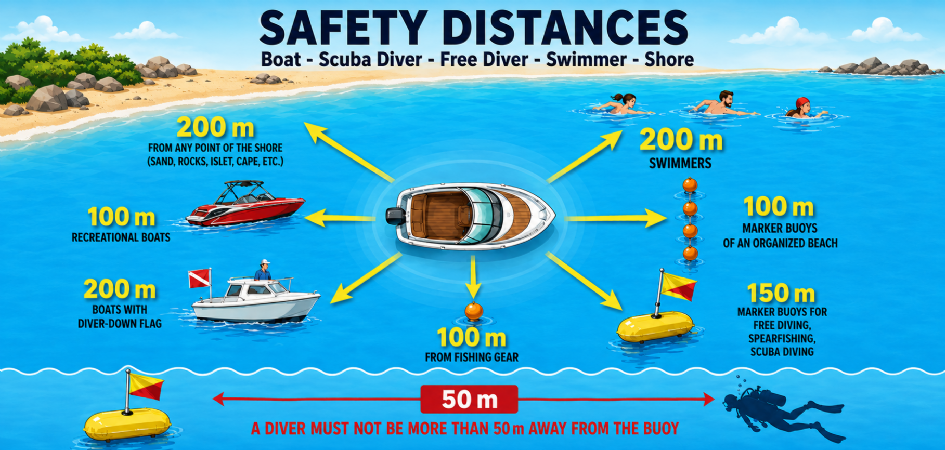
Safety Distances at Sea: A Simple Guide for Boat Renters
Spending a day at sea is one of the most enjoyable ways to explore the coastline, discover quiet beaches, swim in crystal-clear waters and experience complete freedom away from the crowds. However, that freedom always comes with one essential responsibility: safety. Whether you are renting a boat for the first time or you already have experience at sea, understanding the correct safety distances is one of the most important parts of responsible boating. These distances are designed to protect swimmers, divers, other boats, fishing equipment and everyone enjoying the sea. At our boat rental company, we want every guest to feel confident, informed and safe before leaving the dock. This guide explains the key safety distances every boat operator should respect.
Why Safety Distances Matter
The sea is shared by many different users: boats, swimmers, snorkelers, free divers, scuba divers, spearfishers, fishermen and people relaxing near organized beaches. From the boat, some hazards may not be immediately visible, especially divers below the surface or fishing gear floating nearby. Keeping the correct distance gives you more time to react, reduces the risk of accidents and helps everyone enjoy the sea safely. It is not only about following rules; it is about good seamanship and respect for others.
Keep 200 m from Swimmers
Boats must keep a safe distance from swimmers. As a general rule, you should stay at least 200 meters away from swimmers. Swimmers can be difficult to see, especially in bright sunlight, small waves or crowded areas. Always reduce speed when approaching beaches, bays or areas where people may be swimming. Never assume that swimmers will move out of your way. The responsibility is always on the boat operator to avoid them.
Keep 200 m from the Shore
When operating near the coastline, maintain a distance of at least 200 meters from any point of the shore, including sandy beaches, rocks, small islets, capes or rocky formations. This distance is especially important because people may be swimming close to the shore even if there are no visible beach facilities. Shallow waters can also hide rocks, reefs or sudden depth changes that may damage the boat or create dangerous situations. Approach the shore only in permitted areas and always at very low speed.
Keep 100m from Recreational Boats
When passing near other recreational boats, keep at least 100m of distance. Other boats may be anchored, drifting, maneuvering, towing equipment or preparing to start moving. By keeping a proper distance, you avoid unnecessary risk and prevent waves from disturbing passengers, swimmers or anchored vessels. A good rule is simple: pass wide, pass slowly and never cross too close to another boat's bow or stern.
Keep 100 m from Organized Beach Marker Buoys
Organized beaches often use floating marker buoys to separate swimming zones from boating areas. Boats should stay at least 100 meters away from these marker buoys. These buoys usually indicate areas where swimmers are expected to be present. Entering or passing too close to such zones can be extremely dangerous. Even if the area looks empty, always respect the markers.
Keep 200 m from Boats Displaying a Diver-Down Flag
A boat with a diver-down flag indicates that there are divers in the water. You must keep at least 200 meters away from any boat displaying a diver-down flag. Divers may be below the surface and impossible to see from your boat. They can also surface unexpectedly. When you see a diver flag, reduce speed immediately, stay well clear and never pass close to the boat or buoy marking the diving activity.
Keep 150 m from Diving, Free Diving or Spearfishing Marker Buoys
Yellow or marked buoys may indicate the presence of scuba divers, free divers or spearfishers. Boats should keep at least 150 meters away from these marker buoys. This is one of the most important safety rules at sea. A diver may be far from the buoy but still within the permitted diving area. Always treat any diving buoy as a clear warning sign: someone is underwater nearby.
Keep 100 m from Fishing Gear
Fishing gear may be marked with floats, buoys or other visible indicators. Boats should keep at least 100 meters away from fishing equipment. Passing too close can damage fishing gear, entangle lines in the propeller or create a risk for both the boat and the people using the equipment. If you notice floating markers, slow down, change course and give them plenty of space.
Divers Must Stay Within 50 m of Their Buoy
For divers, free divers and spearfishers, the marker buoy is their visible safety signal to boats. A diver should not be more than 50 meters away from their buoy. This helps boat operators identify the active diving area and keep a safe distance. If you are boating and see such a buoy, assume there is a person underwater nearby and remain alert.
Practical Tips for Safe Boat Operation
Before leaving the harbor, always make sure you understand the local navigation rules and safety briefing. While at sea, follow these practical habits:
- Keep constant visual awareness around the boat.
- Reduce speed near beaches, swimmers, boats and buoys.
- Avoid sudden maneuvers close to other vessels.
- Never enter marked swimming zones.
- Keep a safe distance from diving flags and buoys.
- Watch carefully for floating fishing gear.
- Use common sense when visibility is limited.
- Ask our team before departure if you are unsure about any route or area.
Safety Makes the Experience Better
A safe boat trip is a better boat trip. When everyone follows the correct distances, the sea becomes safer and more enjoyable for all: boaters, swimmers, divers, fishermen and beachgoers. Our goal is to help you enjoy your day at sea with confidence. Before every rental, we provide guidance on boat handling, navigation, local conditions and essential safety rules. By respecting these simple distances, you protect yourself, your passengers and everyone else sharing the water.
Enjoy the sea, respect the rules and keep your distance. Safety always comes first.